
When the power goes out, most homeowners are asking one question: will my house still work? The honest answer is that it depends entirely on which pieces of a system you have — and whether they were designed to work together. Two homes can both have solar panels and get completely different results during the same outage.
Here is the part that surprises people most: solar panels by themselves are not backup power. The pieces below are what actually carry a home through an outage, and the order matters.
1. Solar panels: generation, not backup
Solar is the part most homeowners already understand. Panels turn sunlight into electricity during the day, which lowers the amount of power you buy from the utility. As a starting point for a broader energy plan, solar makes a lot of sense.
What solar does not do on its own is keep the lights on when the grid fails. A standard grid-connected solar system is required to shut down the moment utility power is interrupted. This is a safety rule, not a product flaw: if the utility is working on a downed line, an inverter that keeps pushing power onto the grid could injure a lineworker.
The most common misconception
A neighbor whose solar system is working normally during the day is not proof that solar keeps the lights on in an outage. Without batteries, transfer equipment, and the right controls, the panels go quiet when the grid does.
2. The battery: where stored power lives
A battery is what turns a solar system into a backup system. It stores energy — either from your panels or from the grid — and holds it until it is needed. When utility power drops, the battery is the source your home actually runs on.
How much of your home it can carry, and for how long, is a design decision. Battery capacity, the efficiency of the home, and which loads are switched on all determine runtime. This is why two homes with similar-size batteries can get very different results.
3. The transfer switch: how the home changes over safely
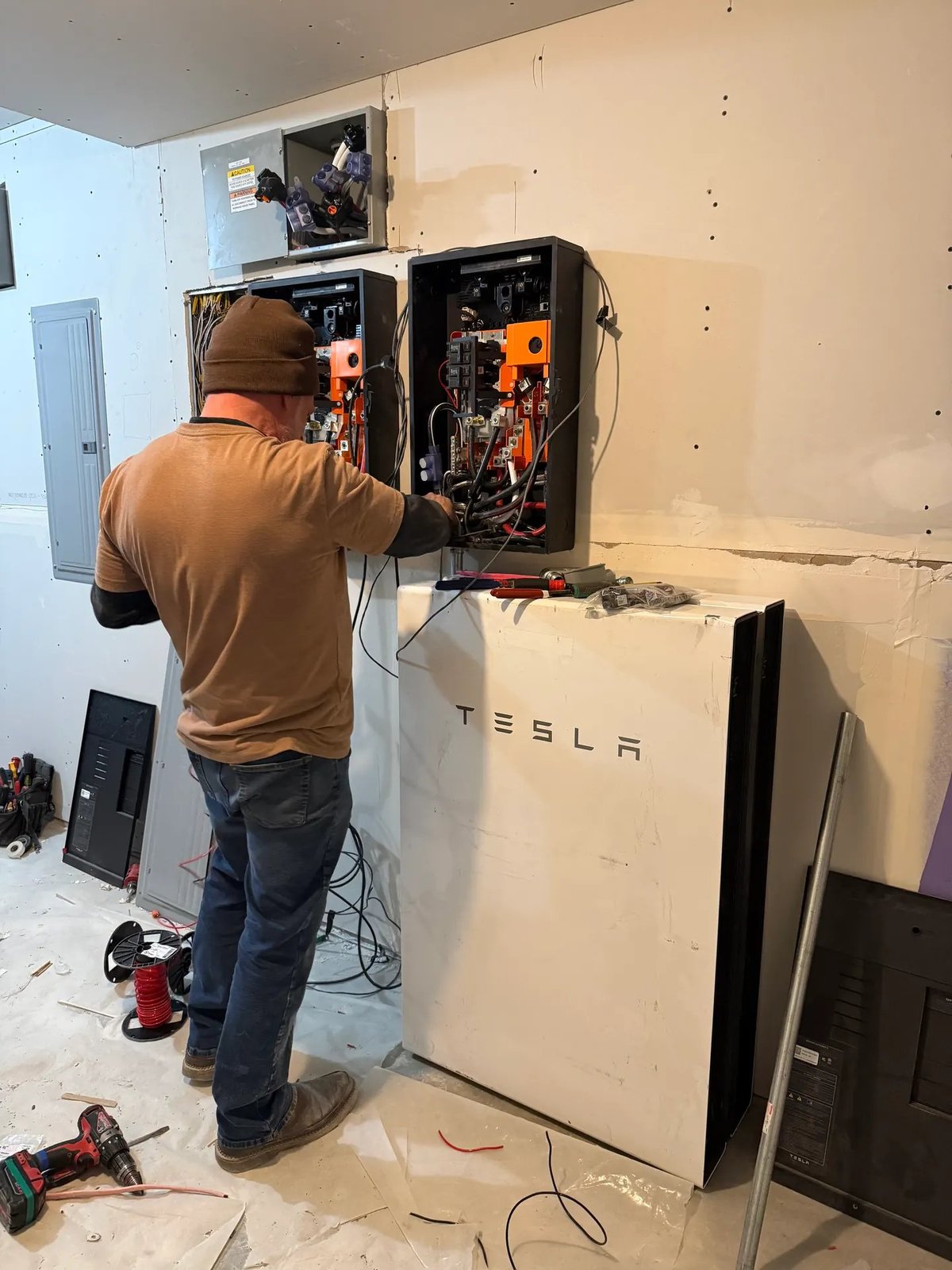
When the grid goes down, your home has to disconnect from it before any backup source can energize your wiring. That is the transfer switch's entire job — and it is one of the least visible, most important parts of the system.
Without it, backup power would feed back onto the grid, which is dangerous and can also prevent the system from operating at all. A properly installed transfer switch isolates your home, lets backup power take over, and then returns you to the grid when service comes back.
4. The backup panel: which circuits come back
A backup panel takes the circuits you care about and puts them on their own panel that the battery feeds. Instead of backing up the entire house, this approach focuses available power on the parts that matter most:
- Refrigeration and freezers
- Internet and home office equipment
- Lighting and key outlets
- Heating or cooling
- Well pumps
- Medical equipment
This is called essential-load backup. It is often the most practical way to add real outage protection without sizing the battery around every load in the house.
5. Load management: where limited power goes
Backup capacity is not unlimited. A smart panel or load-management system gives you visibility into how the home is using electricity and control over where available backup power is directed.
Those same tools are useful when the grid is operating normally — app-based monitoring, custom alerts, and a clearer picture of individual loads. During an outage, they are what let the system make better use of what remains instead of treating every load equally.
Putting the pieces in order
None of these pieces is a silver bullet. The reason outage protection works is that they are designed as parts of one system, with the transfer equipment and controls sized to match the generation and storage.
That is also why the right answer changes from home to home. Solar, battery capacity, backup equipment, load management, and electrical upgrades may all be involved — or only some of them. The design starts with what you want your home to be able to do, not with a predetermined bundle.